Starbucks Dress Code (Complete Guide for All Partners)
Working at Starbucks means becoming a partner in one of the world most recognizable coffee brands. Whether you’re a new barista preparing for your first shift or a job applicant getting ready for an interview, understanding the Starbucks dress code helps you start confidently.
The company maintains a workplace appearance policy that balances three things:
-
Professional customer experience
-
Food safety standards
-
Personal expression
Unlike many fast-food chains, Starbucks allows partners to show some personality through clothing and hairstyles. However, there are still clear rules about colors, shoes, accessories, and safety.
This guide explains everything partners need to know about the Starbucks dress code from shirts and pants to tattoos, piercings, and apron rules.
What Is the Starbucks Dress Code?
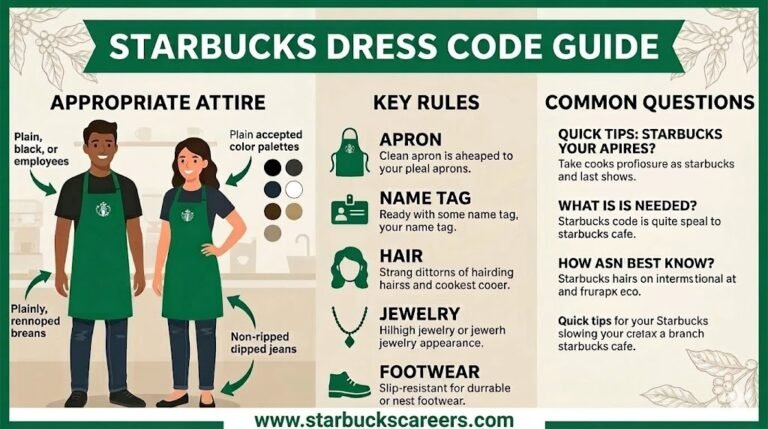
The Starbucks dress code requires partners to wear neutral-colored clothing, closed-toe shoes, and a Starbucks apron while maintaining a professional appearance suitable for a food service environment.
These guidelines are outlined in the Starbucks Partner Guide, which is provided to employees during training.
The policy applies to partners working in:
-
Company-owned Starbucks cafés
-
Drive-thru locations
-
Licensed stores inside supermarkets or airports
-
Starbucks Reserve locations
Although minor differences may exist between stores, the core dress code rules remain consistent worldwide.
Why Starbucks Has a Dress Code
The dress code is not just about appearance it also supports safety and brand consistency.
1. Brand Identity
Starbucks has built a recognizable brand since its founding in Seattle. Customers immediately associate baristas with the iconic green apron and professional attire.
Former Starbucks leader Howard Schultz emphasized the importance of a welcoming café atmosphere, and employee presentation plays a big role in that experience.
2. Food Safety
Baristas handle drinks, ingredients, and equipment throughout the shift. Proper clothing helps maintain hygiene standards similar to those recommended by the U.S. Food and Drug Administration for food service workers.
3. Workplace Safety
Working in a coffee shop involves:
-
Hot beverages
-
Steam wands
-
Espresso machines
-
Cleaning chemicals
Closed shoes, controlled hair, and minimal jewelry reduce accidents and meet workplace safety practices aligned with the Occupational Safety and Health Administration.
Starbucks Partner Uniform: The Iconic Apron
The most recognizable part of the Starbucks uniform is the apron.
The Starbucks Green Apron
Every partner receives the Starbucks Green Apron, which symbolizes the company’s mission to create welcoming coffee experiences.
Apron Rules
Partners must:
-
Wear the apron during their shift
-
Keep it clean and presentable
-
Remove it when leaving the store on break
Managers may ask partners to change aprons if they become dirty during busy shifts.
Different Types of Starbucks Apron
Although the green apron is standard, there are several variations used in special situations.
| Apron Type | Meaning |
|---|---|
| Green Apron | Standard partner uniform |
| Black Apron | Coffee Master certification |
| Red Apron | Holiday season uniform |
| Specialty Aprons | Used at select Starbucks Reserve stores |
These aprons help customers identify experienced baristas or seasonal promotions.
What Starbucks Employees Can Wear
Starbucks allows partners to wear personal clothing within certain guidelines.
Allowed Shirt Colors
Clothing should generally follow neutral or muted tones.
Common approved colors include:
-
Black
-
White
-
Gray
-
Navy
-
Brown
-
Beige
These colors complement the green apron and maintain a clean café aesthetic.
Acceptable Clothing Styles
Partners can wear different types of tops as long as they meet dress code standards.
Examples include:
-
Plain T-shirts
-
Collared shirts
-
Button-down shirts
-
Blouses
-
Sweaters
-
Casual knit tops
Clothing should look neat and comfortable for long shifts.
Pants and Bottoms Rules
Starbucks allows several options for bottoms as long as they remain professional.
| Allowed Bottoms | Notes |
|---|---|
| Dark jeans | No rips or distressing |
| Khakis | Neutral tones preferred |
| Slacks | Business-casual style |
| Skirts | Knee-length or longer |
Many baristas prefer dark jeans because they hide coffee stains better during busy shifts.
Barista vs Shift Supervisor Differences
Most dress code rules apply equally. However:
Shift Supervisors may be expected to:
-
Maintain a slightly more polished look
-
Avoid overly casual styling
-
Lead by example
Managers may enforce higher standards for leadership roles.
Starbucks Dress Code by Country
United States
The U.S. policy is generally flexible with fashion hair colors and visible tattoos, provided they’re appropriate. Slip-resistant shoes are strongly encouraged due to safety liability concerns.
United Kingdom
UK stores may lean slightly more conservative in presentation. Some licensed stores may require more standardized tops.
Canada
Canadian stores typically mirror U.S. policies but may emphasize winter-appropriate footwear rules and layered clothing flexibility.
What Starbucks Employees Cannot Wear
Certain clothing items are prohibited because they conflict with safety or professional standards.
Prohibited Clothing
Employees should avoid:
-
Bright neon colors
-
Clothing with large logos
-
Graphic T-shirts with messages
-
Athletic shorts
-
Sweatpants
-
Distressed or ripped jeans
These items can look unprofessional or distract from the brand image.
Fabric and Fit Restrictions
Clothing should also meet practical workplace standards.
Avoid garments that are:
-
Transparent
-
Extremely loose
-
Difficult to clean
-
Unsafe around equipment
Partners often choose simple cotton shirts or casual workwear.
Starbucks Hair Color Policy & Grooming Standards
Does Starbucks allow dyed hair? Yes. Fashion colors like blue, pink, or purple are commonly allowed, provided hair is:
Starbucks allows more personal expression than many food service employers.
Acceptable Hair Styles
Hair should be:
-
Clean
-
Controlled
-
Safe around food preparation areas
Long hair is typically tied back during shifts.
Colored Hair Policy
Starbucks generally allows creative hair colors such as:
-
Blue
-
Purple
-
Pink
-
Green
This flexible policy helps attract younger employees and reflects modern workplace culture.
Nails & Makeup
-
Acrylic nails are often restricted in food handling roles.
-
Neutral nail polish may be allowed.
-
Makeup is optional but should be professional.
Fragrance Rules
Strong perfumes are discouraged due to customer sensitivity and food environment standards.
Starbucks Tattoo Policy
One of the most common questions from job applicants is whether tattoos are allowed.
The answer is yes, in most cases.
Starbucks allows tattoos as long as they are not offensive or inappropriate.
Tattoos Not Allowed
Managers may ask employees to cover tattoos containing:
-
Hate symbols
-
Violent imagery
-
Explicit content
Otherwise, visible tattoos are typically acceptable.
Starbucks Piercings and Jewelry Rules
Facial piercings are usually limited to small, subtle studs. Large gauges, distracting jewelry, or multiple facial piercings may not be permitted. If you’re wondering, “Can I have a nose piercing at Starbucks?” typically yes, if it’s a small stud. Always confirm with your store manager. Accessories are allowed but should remain minimal and safe.
Allowed Jewelry
Partners can typically wear:
-
Small earrings
-
Nose studs
-
Watches
-
Simple rings
Jewelry Restrictions
Avoid accessories that could interfere with food preparation, such as:
-
Large dangling earrings
-
Long necklaces
-
Multiple bracelets
Safety and hygiene are the main reasons for these restrictions.
Starbucks Shoes Policy
Footwear is one of the most important dress code rules.
Baristas work on slippery café floors and handle hot drinks throughout the shift.
Required Shoe Features
Starbucks partners must wear shoes that are:
-
Closed-toe
-
Closed-heel
-
Slip-resistant
These features help prevent burns and falls.
Recommended Shoe Types
| Shoe Type | Recommended |
|---|---|
| Non-slip work shoes | ✔ |
| Work sneakers | ✔ |
| Leather work shoes | ✔ |
| Sandals | ❌ |
| Open-toe shoes | ❌ |
Comfortable footwear is especially important for long shifts.
Winter Considerations (Canada & Northern U.S.)
In Ontario, British Columbia, New York, or other cold regions, waterproof boots may be allowed for commute but you may be asked to change into compliant footwear during shift.
Accessories and Makeup Guidelines
Starbucks partners are encouraged to look clean and approachable.
Makeup
Makeup is generally allowed if it appears:
-
Professional
-
Clean
-
Not overly dramatic
Many baristas choose natural styles for everyday shifts.
Hats and Headwear
Hats are sometimes allowed depending on the store.
Partners working in kitchen or preparation areas may wear hats for hygiene reasons.
First-Day Starbucks Dress Code Checklist
Starting your first shift can feel stressful. Following a simple checklist ensures you arrive prepared.
What to Wear on Your First Day
-
Neutral colored shirt
-
Dark jeans or khakis
-
Closed-toe shoes
-
Minimal jewelry
-
Clean and controlled hair
Your store manager will usually provide your apron on the first day.
Starbucks Interview Outfit Tips
Before you become a partner, you may attend a job interview at a Starbucks store. A simple professional look works best.
What to Wear to a Starbucks Interview
Starbucks Interview attire is different from shift attire. Wear business casual in neutral tones. Avoid jeans, athletic shoes, and loud prints. Interview outfit suggestions for most candidates are these below.
Men:
-
Collared shirt
-
Chinos or slacks
-
Closed-toe dress shoes
Women:
-
Blouse or modest top
-
Slacks or knee-length skirt
-
Flats or modest heels
Avoid wearing gym clothes or overly casual outfits.
Common Starbucks Dress Code Mistakes
New partners sometimes accidentally break the dress code. Avoid these common errors.
1. Wearing Bright Colors
The policy prefers neutral tones. Neon clothing stands out too much under the apron.
2. Choosing Unsafe Shoes
Open-toe shoes are one of the most frequent mistakes among new hires.
3. Wearing Graphic Shirts
Logos or messages can conflict with brand standards.
4. Too Many Accessories
Excessive jewelry may be unsafe while preparing drinks.
Pros & Cons of the Starbucks Dress Code
Pros
-
Allows personal expression
-
Permits visible tattoos
-
No full uniform purchase required
-
Flexible color palette
Cons
-
Manager discretion varies
-
Not as clear as a strict uniform
-
Requires wardrobe planning
-
Some licensed stores are stricter
How Starbucks Dress Code Compares to Other Coffee Chains
Many coffee shops have strict uniforms, but Starbucks is relatively flexible.
| Company | Dress Code Style |
|---|---|
| Starbucks | Neutral clothing + green apron |
| Dunkin’ | Branded shirt + uniform |
| McDonald’s | Corporate uniform |
Starbucks allows more personal style than many fast-food restaurants.
Regional Dress Code Differences
Although the core policy is global, small variations can appear in different cities.
For example:
-
Stores in New York City often see more fashion variety among partners.
-
Locations in London may emphasize slightly more formal workwear.
Licensed stores inside hotels or airports sometimes add extra requirements.
Why the Starbucks Dress Code Matters
Following the dress code helps partners:
-
Maintain professionalism
-
Work safely with hot equipment
-
Represent the Starbucks brand consistently
Customers often associate the partner appearance with the quality of their coffee experience.
Final Thoughts
The Starbucks dress code is designed to balance professionalism, safety, and individuality. Partners are expected to wear neutral clothing, closed-toe shoes, and the iconic apron while maintaining a clean and friendly appearance.
Compared to many fast-food chains, Starbucks offers more flexibility with hairstyles, tattoos, and personal style. However, following the core guidelines ensures a safe and welcoming café environment.
If you’re preparing for your first shift or a job interview, sticking to simple neutral clothing and comfortable work shoes will help you start your Starbucks journey with confidence.
FAQs
Can Starbucks employees wear jeans?
Yes. Starbucks partners can wear dark jeans as long as they are not ripped, distressed, or overly faded.
Does Starbucks provide uniforms?
Starbucks usually provides the apron, while employees supply their own shirts, pants, and shoes according to dress code guidelines.
Can Starbucks employees have tattoos?
Yes. Visible tattoos are allowed unless they contain offensive or inappropriate imagery.
Can Starbucks workers dye their hair?
Yes. Starbucks allows creative hair colors like blue, pink, or purple as long as hair is clean and professional.
What shoes do Starbucks employees need?
Employees must wear closed-toe, closed-heel, slip-resistant shoes suitable for café work environments.
Are leggings allowed at Starbucks?
Leggings are typically not allowed as standalone pants but may be worn under skirts or dresses.
Can Starbucks employees wear hoodies?
Most stores discourage hoodies because they can appear too casual or unsafe in food preparation areas.
Can Starbucks employees wear shorts?
Shorts are usually not permitted unless approved by a store manager in certain climates.
Can Starbucks employees wear hats?
Some stores allow hats for hygiene reasons, but policies may vary by location.
What should I wear to my first Starbucks shift?
Wear a neutral shirt, dark pants or jeans, closed-toe shoes, and minimal jewelry. Your manager will provide the apron.
Is the Starbucks dress code strict?
The dress code is moderately flexible compared to many food chains. Partners can express personal style while maintaining professional and safety standards.